It’s a Battlefield
Published 1934
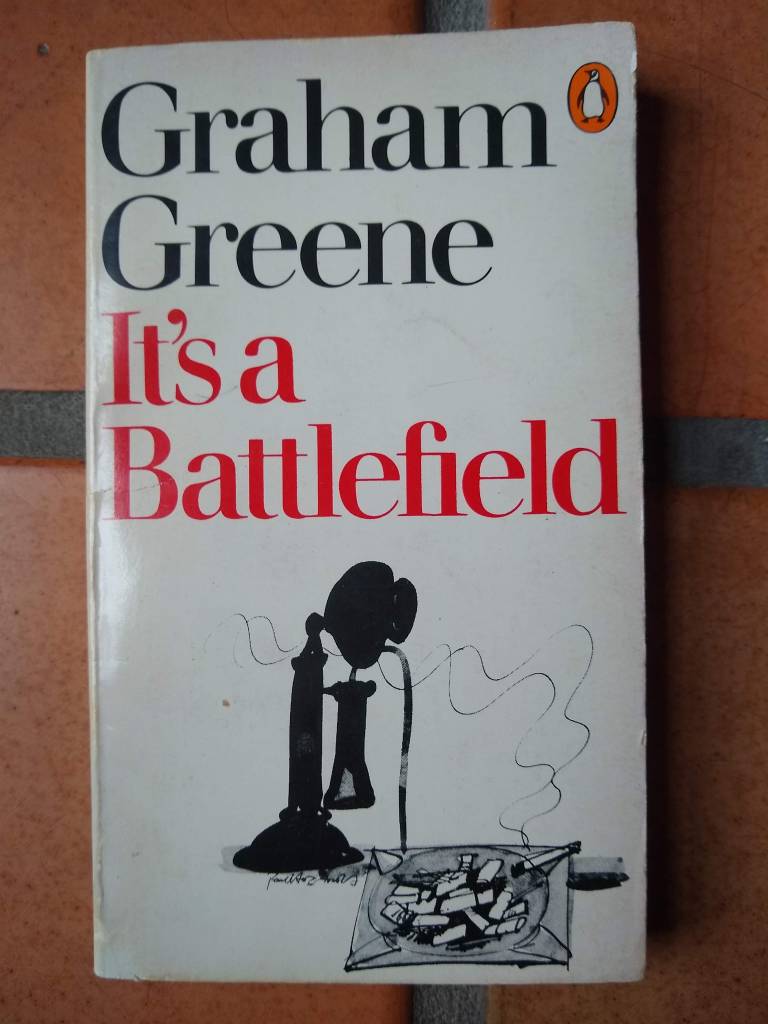
The title of this book provides the conceit that drives the book. Everyone views the goals and difficulties that fill their days as a battlefield, largely unaware of the battles others are fighting. The book is made up of these individual battles, providing a view of a battlefield in which the combatants are unaware that they are participants in any greater conflict.
Fundamentally, the book centers around whether Jim Drover will be hanged. Jim is a communist bus driver who killed a policeman who was going to hit his wife at a march. The gallows and worry about his wife form Jim’s battle. Jim and Milly Drover had been a close and loving couple and Milly is uncertain how to live without Jim. This is her battle. Conrad Drover is Jim’s brother. Jim has strength, Conrad has brains. He loves his brother and he is in love with Milly, who thinks he’s a weakling. That is his battle. The Assistant Commissioner in charge of Scotland Yard is an aging bureaucrat back from colonial service, punctilious at his job and worried about being forced into retirement. An important member of parliament is pressuring him to find an excuse to reprieve Jim Drover’s life, as the execution may sway public opinion toward the communists. That is the Assistant Commissioner’s battle.
Other combatants fight their battles off to the sides: Mr. Surrogate, middle-aged economist and Communist thinker, battling his dead wife whom he never satisfied. Kay Rimmer, Milly’s sister, searching for a man, but only finding pleasure in the ones she doesn’t love. Conder, a journalist living in a world of fantasy and haunted by his memories. Finally, Caroline Bury, aging patronne of the arts and social activist, now fighting a terminal illness and to save Jim Drover’s life.
How can Jim Drover be saved? The Communists started a petition for his life to be spared, although they don’t believe it will do any good. At Conrad’s suggestion, Milly goes to get the signature of the policeman’s widow for the petition, thinking that that might help. The important member of parliament tasked the Assistant Commissioner to write a report on how different sections of society will perceive Drover’s execution. After conferring with his agents working among different sectors of London’s underclass, his conclusion is that Drover’s death won’t matter much to anyone. As he puts it to Caroline Bury when the latter presses him to submit a report that would aid Drover’s reprieve, “The truth is, nobody cares about anything but his own troubles. Everybody’s too busy fighting his own little battle to think of the… next man.”
Indeed, when Conrad points out to Milly that even if Jim avoids the gallows he will be behind bars for 18 years, she falters before the long, lonely days to come. Conrad presses home his point that she needs a man about. Who better to keep her bed warm than himself? (His brother had asked him to look after Milly, but is that what he meant?) Milly appreciates his argument, but doubts that he is much of a man. What will it take for him to prove himself?
As the characters in this book work through their personal battles, they feel at turns helpless to save Jim and apathetic to his fate. Similar to Orient Express, this book introduces characters with complex back stories and messy goals, ambitions, and personal problems. Nothing goes quite according to plan. In both The Man Within and Orient Express, the betrayal by one character of another forced the unexpected denouement. In It’s a Battlefield, the betrayal is by one character against himself. The book burbles with cynicism, from the initial introduction of each character through the studied expression of futility in the final passage. It casts an wry-ironic eye on the “battles” fought. The characters are flawed. But, if we look more closely at the longings and occasional moral ambition one or another of the books combatants expresses, we find the germ of another, deeper battle. One that isn’t about saving Jim Drover’s life, but about each person saving their own life from routinized despair. Of course, one may get run over by a bus before this germ has the chance to grow into anything greater than a quiet sense that things could be different.
 Mad Scribble