The End of the Affair
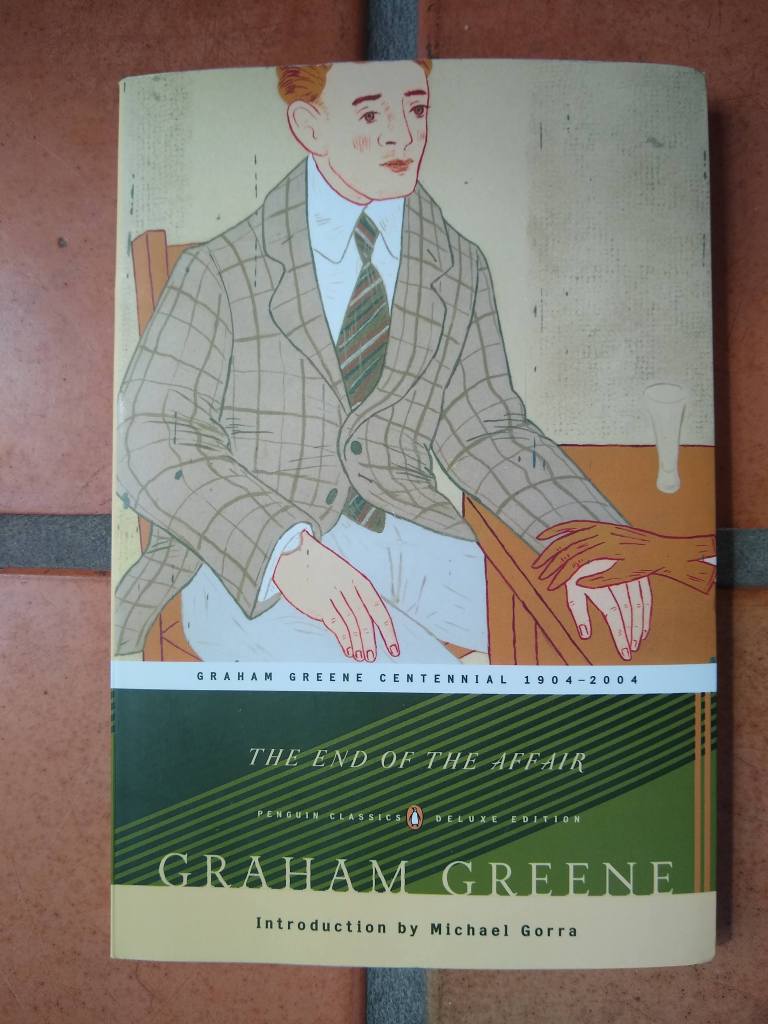
Published in 1951
This book is a strange roller coaster. I found the first half to be so dull that I had to force myself to continue reading. This is followed by a brilliant 50 or so pages. Finally, the end of the book is absurd. It is difficult for me to give a single judgment of this book. Greene writes with great skill and this book is a tight specimen of his craft (except for the ending). But perhaps Greene’s ability is a trap: he can cover up a mediocre plot and mediocre characters with consistently intelligent turns of phrase and humor.
This book is about… an affair that has ended. The narrator fell in love with the girl next door, who happened to be the wife of an increasingly important government bureaucrat. Throughout much of WWII, Maurice and Sarah made passionate love and fought with each other several times a week, sometimes even as the bombs fell around them. Luckily, Sarah’s husband, Henry, was oblivious and their affair was not hard to conceal. Then, like a bomb out of the blue, Sarah left Maurice.
Several years pass. Maurice has stewed in his hate. When Henry meets Maurice by chance and explains that he’s concerned about Sarah’s fidelity, as she often leaves the house in the evening with no explanation, Maurice is intrigued. He sets a detective upon Sarah to find out who the other man is. Finally, as the culmination of the detective’s refined skullduggery, the detective steals Sarah’s diary during a soirée. From this, Maurice learns the terrible truth of why Sarah left him. Is there still time to change things? Can the affair un-end? Or will the foreshadowing that I noticed, but everyone in the book was oblivious to, win out in the end?
This book revolves around a great revelation, which Sarah describes in her diary. The revelation took place the day that a V1 guided missile hit the house Maurice and Sarah were making love in and crashed a door down on top of Maurice. When Maurice didn’t move, Sarah thought he was dead. When Maurice walked back into the room, Sarah kept her painful vow.
The revelation of this revelation makes Maurice’s hatred transubstantiate into love. He wants to renew the affair. Sarah is more than willing, but there is a problem. And then a more conclusive problem… Greene manages this section of the book with magnificent ability. It feels as if the novel actually begins here, halfway through the way through the book. Everything that preceded this point was dull prologue.
But then the book goes in a very strange direction for the final several dozen pages and ends in a banal quagmire of religious whimsy.
*
This is the final of Graham Greene’s so-called Catholic novels, which also included Brighton Rock, The Power and the Glory, and The Heart of the Matter. These novels have dwelt on the difficulty of doing right and the missed connection that often occurs between moral intention and moral result. They have also focused on the deep, irrational, often mortal beliefs of Catholicism. This book is the simplest of these novels: the plot is straightforward, the characters are not particularly complex. The depth of feeling touched in this book is not so great as in the previous books.
These books have detailed, in their distinct ways, the willful morbidity of a belief in God and the possibilities for despair that present themselves only to those with the deepest faith.
 Mad Scribble