Bonus Book: No Man’s Land
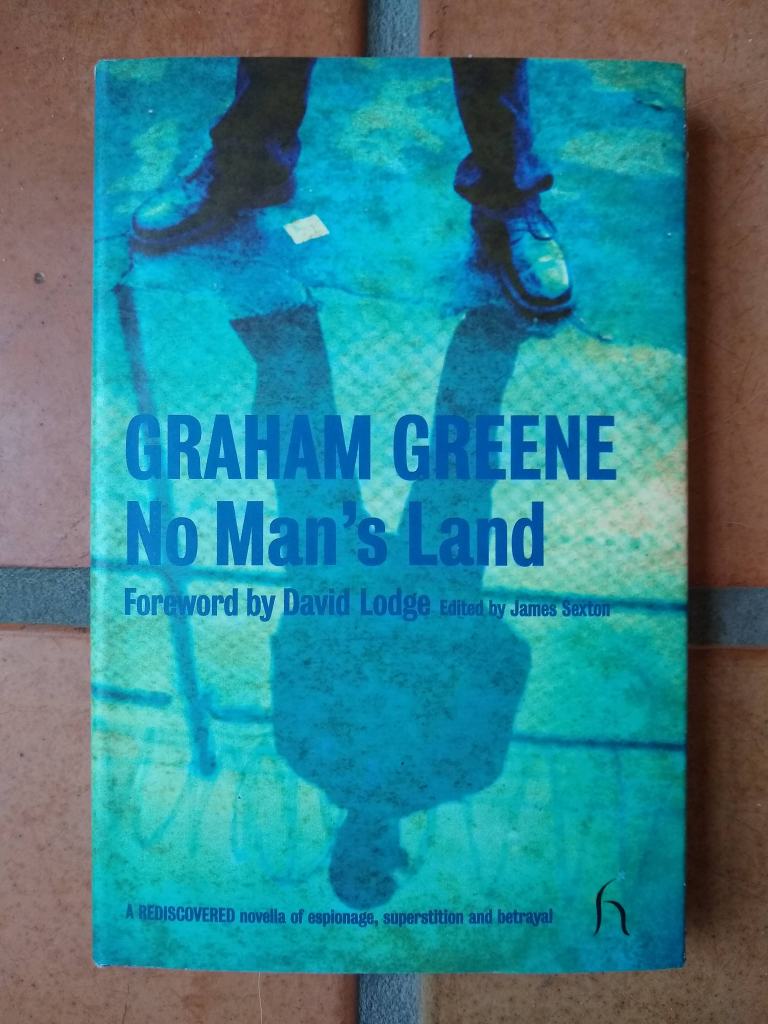
This book contains two movie treatments posing as novellas that were never published during Greene’s life. The first, No Man’s Land, was written in 1950 and is an exploration of the consequences of crossing the Iron Curtain. The second, The Stranger’s Hand, was written in 1953 and is a Cold War thriller that takes place in Venice. It was made into a movie in 1954.
I just found out about this book and so it is a little out of chronological order.
*
The Iron Curtain has divided Germany. But in the early 1950s this divide was ideological and political, not physical. A brisk walk through the Harz Mountains could bring one to the other side: a land just as pretty, peopled by men and women just as passionate, but all playing a different game, with stakes ranging from love to global nuclear annihilation.
When Richard Brown crosses to the other side to look for a contact that didn’t show, he meets a beautiful woman instead. Clara is in love with Starhov, the local Soviet intelligence commander who is tasked with interrogating Brown over his suspicious presence there. This area of the Harz Mountains is known for two things: a shrine commemorating an apparition of Mary and uranium mines. Brown seems an unlikely pilgrim. But Starhov and Brown are both aficionados of Turgenev and get along quite well, even if realpolitik requires that they distrust each other’s motives.
This being a Graham Greene book, Clara quickly falls in love with Brown. The love triangle works well for a week, but then Brown wants to escape. If he succeeds, then Starhov’s career will be cut brutally short.
This is an interesting read. Unfortunately, it was never made into a movie. Perhaps the disparaging comments on the concept of the Iron Curtain or the fact that Starhov is a sympathetic character made this story undesirable at the beginning of the Cold War. Also, the basic structure of the plot is quite similar to The Third Man.
One theme that weaves its way through much of Graham Greene’s writing is the greater importance of the human over the ideological. Greene is more interested in the people on either side of a political border as human beings with their own passions and peccadillos than he is interested in their politics.
The strip of land between enemies is a no man’s land. But if the lands on either side do not allow for humanity, then perhaps it’s all no man’s land.
*
It’s not surprising that The Stranger’s Hand was not published during Greene’s lifetime. He did not finish the story and let screenwriter Guy Elmes finish it. The latter changed the piece from a sad story about a young boy abandoned in Venice to a Cold War propaganda piece in which the hero is an over-sexed American sailor (Richard Basehart) who helps at the behest of his Italian heart-throb girlfriend (Alida Valli), who has taken in the boy.
The story is mildly interesting, but just as it started to get exciting Greene stopped writing. This edition of the book includes a summary of the rest of the story as written by Elmes.
Perhaps the most interesting aspect to The Stranger’s Hand is that the first couple of pages were written as a joke. A newspaper held a contest to write the opening pages of a novel in the style of Graham Greene and Greene entered the contest under a pseudonym using the beginning pages of this story. He won second place.
 Mad Scribble