Collected Essays
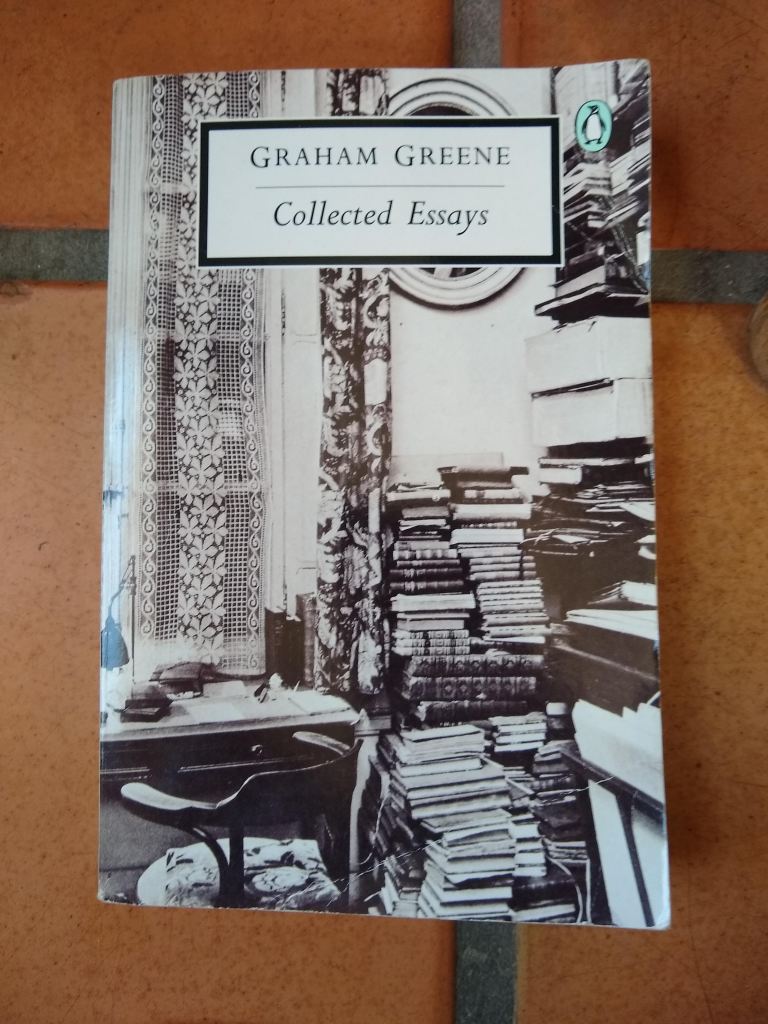
Published 1969
This collection includes essays by Greene from the late 1920s until the late 1960s. Almost all of these essays are related to literature and most of them are either book reviews or prefaces. These essays range from insightful to dull. Many of the essays are erudite discussions of literature and the writing process and provide a behind-the-scenes view of how one author reads other authors, with a constant awareness of the difficulties and expectations of the craft. In a note at the beginning of the book that explains why he includes essays that aim cast vitriol at now somewhat forgotten figures, Greene includes an often quoted line, “A man should be judged by his enemies as well as by his friendships.”
On the insightful side are seven essays about Henry James. Perhaps because he is an author that I also greatly admire and perhaps because I have already read most of the James novels that Greene references, I found these essays to be very interesting. The first book by James I read was The Ambassadors, which came into my hands by accident when I was in high school. That is rather deep water in which to begin. I could barely understand the sentences, not because the syntax was complex, but because the sustained metaphors and description of his character’s actions and lives from within their psyches was like nothing I had ever encountered.
James’ novels focus on the interaction between an American in Europe (or vice versa in The Europeans). His books often involve an American naïf meeting Old World corruption operating according motives unintelligible to the American. Yet it’s not so simple as that… James never leaves us with a clear moral. It’s not surprising to me that Greene admires James greatly. More than one book by Greene have contained references to James.
Greene is particularly interested in James’ religious sensibilities. He reads much evidence of eternity into James’ work and at times Greene almost seems to declaim in a whisper, “I’m not saying James was a closet Catholic, but…” Yet, in the end, he recognizes that James was not going to pin himself to any orthodoxy, preferring the profane (and more profound) truths that are to be created in art.
Other authors that Greene discusses in these essays include: Bernanos, G.K. Chesterton, Joseph Conrad, Dickens, Arthur Conan Doyle, Ford Madox Ford, Rider Haggard, Somerset Maugham, François Mauriac, Beatrix Potter and several other well known authors. These essays are to me the most interesting as I can follow Greene’s arguments better since I have at least a passing knowledge of each author’s works. In essays written when he was young, Greene is fixated on eternity and how the lack of an understanding of the eternal importance of our actions on Earth creates bad literature. Impetuous youth.
This book also includes essays on several writers that have slipped into more or less obscurity, such as Léon Bloy, Marjorie Bowen, Charles Churchill, Norman Douglas, John Evelyn, W.E. Henley, Frederick Rolfe, and Edgar Wallace among many others. Frederick Rolfe is the least obscure of this lot. Brilliant and creative, pathetic and ready to scrounge off friends (or whomever), Rolfe’s life is as interesting a read as his books. These essays are amusing stories about forgotten authors. Even obscure writers tend to be strange and unhappy people, which makes for good anecdotes. (Interesting fact about Edgar Wallace: He would “write” a novel in three days using a dictaphone and drugs to keep awake.)
*
One essay that sticks out is his preface to the memoirs of Kim Philby. Philby was a double agent who was high up in MI6 but who was really working for the Soviets. Eventually uncovered, he fled to the Soviet Union. Greene had been at MI6 at the same time and claims to have left rather than be promoted by Philby as part of the latter’s machinations to gain more power within the ministry. On several occasions Greene has shown an ambivalence about the Cold War. Perhaps it was the Manichaeanism in Western narratives of a fight of Good against an Evil Empire that repels Greene. Greene recognizes the Philby’s genius and says that he was happy to discover that Philby’s hunger for power, which Greene deplored at the time, was not due to personal ambition, but in the service of beliefs. This essay is a hat-tip to Philby.
With the essay about Kim Philby being an exception, the topics and themes of this collection feel historic. Not only are most of these essays pre-War, but many of the authors that Greene writes about were from the turn of the century or early modern period. That, coupled with literary erudition shorn of the tricks of a novelist, makes for ponderous reading. I will admit that I hardly ever find literary criticism to be worth reading. However, this volume throws light on how Greene viewed the writing process and his peers and that is certainly interesting to one who has now read over twenty of his books.
 Mad Scribble