The Last Word and Other Stories
Published 1991
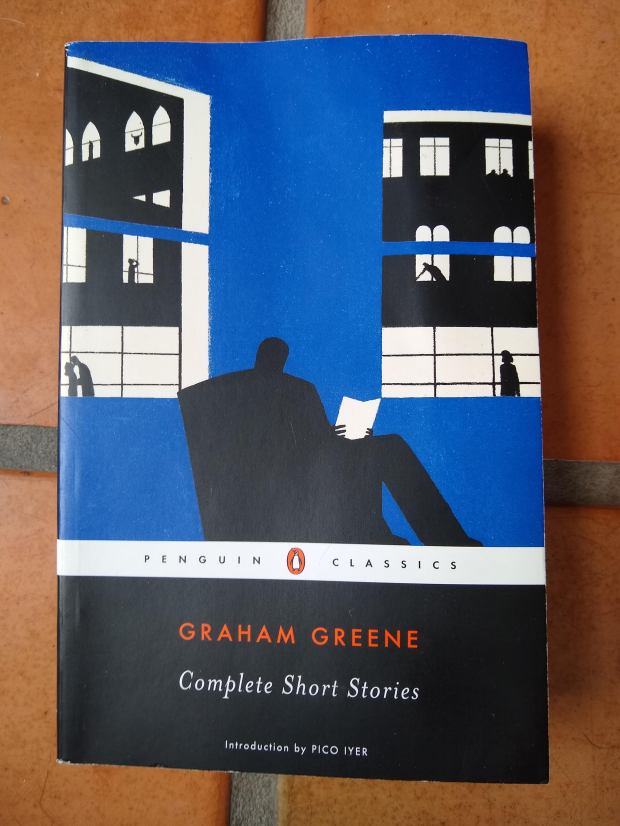
This final collection of Graham Greene’s short stories contains twelve stories written toward the end of his life. This will be the final work of fiction I read by Greene. The Complete Short Stories edition that I am reading includes three additional short stories and the fragment of a novel that Greene started in the mid 1930s. Similar to Greene’s first collection of short stories, this collection does not adhere to any theme. He covers many of the themes that underlain his novels: Catholicism, spycraft, noir. But the collection also includes a handful of stories written with a comedic sarcasm that started to make its appearance only late in his novels (with Our Man in Havana). Like his previous collections, the short stories are hit and miss, but the collection is still well worth reading.
Greene had already sketched out the titular story, “The Last Word”, in a speech included in Reflections. A story about the last Pope, a century or so into the future when world government has eliminated religion. The story describes well the pathetic life of this figure head kept alive for show by the government and the events leading up to his execution by the world leader. But the end of the story, which is supposed to be a momentous zinger, falls flat and seems improbable. Also, why would the world leader personally execute a figure head that nobody cares about?
The collection includes two stories that take place during WWII: “The News in English”and “The Lieutenant Died Last”. Both are successful stories. The first is a small spycraft tragedy about an English professor who has defected to the Nazis and who now reads the news in English on Nazi radio. His wife and mother listen to him each night, the latter with venom, the former with love. One night, the wife realizes that he is passing secrets on the air using a code that only she could identify. She passes on his messages to English intelligence, but everyone else must go on thinking the worst about her husband.
“Murder for the Wrong Reason” is a longer detective story that includes several pages that take place inside the detective’s head. It is perhaps the best story in this collection. “The Lottery Ticket” is the most Greenelandic of the stories here, about a man who wins a lottery ticket in a poor town in southern Mexico and who wants to give the money back to the community. As always happens in a Graham Greene story, the gap between intention and result is wide.
Several of the stories are absurdist, showing a side of Greene that appeared in only several of his novels. “The Man Who Stole the Eiffel Tower” is about what it says. “A Branch of the Service” follows a man who spies on people in restaurants, but whose career is cut short by indigestion. “Dear Dr Falkenheim” is the most ridiculous story that Greene wrote and is about why a young man still believes that Santa was real. It’s also the only Greene story to take place in Canada.
Finally, we have the novel fragment called The Other Side of the Border, which Greene says he wrote in 1936, before abandoning because Brighton Rock needed his time and because he felt that the main character in the book, Hands, was too similar to Anthony Farrent in his novel England Made Me. He is correct on that last point. The unfortunate thing is that I think this novel could have been better than England Made Me, which I found dull, with the story driven along, as it seemed, by inexorable forces.
Hands is a world-wandering rogue from a middle-class family on the far side of youth who would like nothing better than for one of his cons to turn into legitimate success. He talks his way into being in charge of a gold prospecting mission in Liberia. They pay him well and he is in charge of men in Africa. Hands is just the kind of petty, stump-souled man to whom racism confers advantages. He is making connections with like-minded mountebanks when the fragment ends. Could Greene have pulled it off? It’s hard to say. Greene mentioned several times that Conrad was a great influence on him. This novel would have gone in a direction very similar to Conrad’s. It might have been difficult for Greene step out of Conrad’s shadow and to not follow those same ruts.
 Mad Scribble